 Available
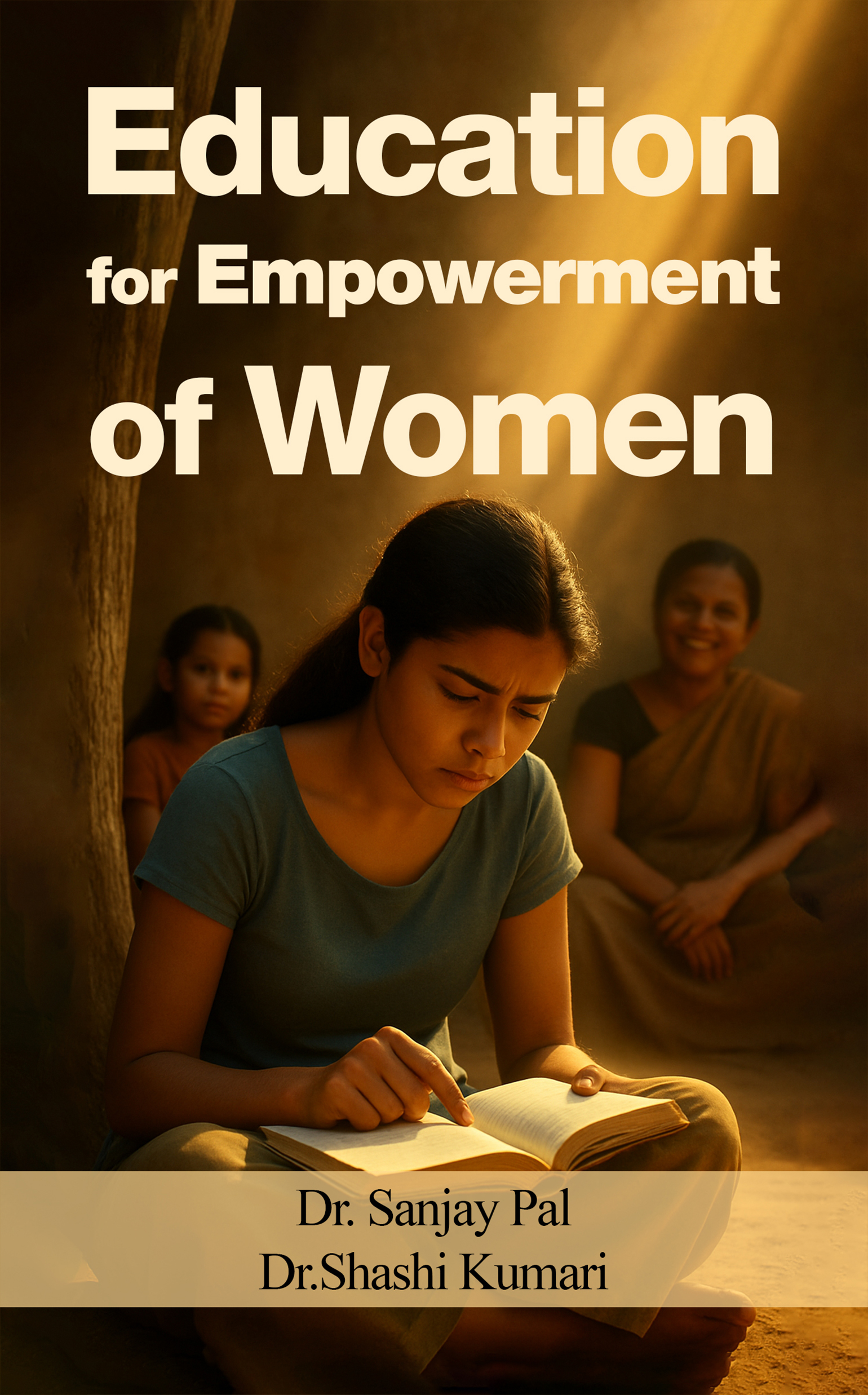
Education for Empowerment of Women
By Dr. Sanjay Pal, Dr. Shashi Kumari
350.00
| SKU Code | Book2301221C |
| ISBN | 9789374241448 |
| Pages | 196 |
| Language | English |
| Genre | Fiction |
| Book Type | Paperback |
| Book Size | 5*8 |
| Published Date | 25 November, 2025 |
Synopsis
Education is the most effective tool for bringing social change and individual empowerment. It provides knowledge, develops skills, and builds confidence, enabling people to lead purposeful lives. For women, education has a special significance, as it not only improves their personal status but also transforms families, communities, and nations. The theme “Education for Empowerment of Women” highlights the vital role that learning plays in breaking barriers of inequality and ensuring gender justice.
Historically, women’s education has faced several challenges. In many societies, women were restricted to domestic roles and denied opportunities to learn. In India too, social customs and prejudices prevented women from receiving formal education. However, social reformers like Raja Ram Mohan Roy, Jyotiba Phule, and Savitribai Phule worked tirelessly to open the doors of education for women. After independence, the Indian Constitution guaranteed equality and the right to education, creating a foundation for women’s empowerment.
Education empowers women in multiple ways. It enables them to participate in decision-making, gain economic independence, and become aware of their rights and responsibilities. Educated women contribute to reducing poverty, improving health, and promoting social harmony. They serve as role models for the next generation, ensuring that the cycle of education and empowerment continues. Thus, women’s education is not only about personal growth but also about national development and social progress.
In recent years, several initiatives have been launched to promote women’s education. Programs like Sarva Shiksha Abhiyan and Beti Bachao Beti Padhao focus on increasing literacy and reducing gender disparity in schools. Despite progress, challenges such as dropout rates, child marriage, economic barriers, and societal attitudes still affect women’s access to quality education. Therefore, collective efforts from the government, society, and individuals are required to create an environment where women can fully benefit from educational opportunities.
This study of “Education for Empowerment of Women” seeks to explore the historical background, its importance, the challenges, and the future possibilities of women’s education. It emphasizes that education should not be viewed merely as formal schooling, but as a means to achieve equality, independence, and empowerment. Only when women are educated and empowered can society achieve true progress and sustainable development.
Historically, women’s education has faced several challenges. In many societies, women were restricted to domestic roles and denied opportunities to learn. In India too, social customs and prejudices prevented women from receiving formal education. However, social reformers like Raja Ram Mohan Roy, Jyotiba Phule, and Savitribai Phule worked tirelessly to open the doors of education for women. After independence, the Indian Constitution guaranteed equality and the right to education, creating a foundation for women’s empowerment.
Education empowers women in multiple ways. It enables them to participate in decision-making, gain economic independence, and become aware of their rights and responsibilities. Educated women contribute to reducing poverty, improving health, and promoting social harmony. They serve as role models for the next generation, ensuring that the cycle of education and empowerment continues. Thus, women’s education is not only about personal growth but also about national development and social progress.
In recent years, several initiatives have been launched to promote women’s education. Programs like Sarva Shiksha Abhiyan and Beti Bachao Beti Padhao focus on increasing literacy and reducing gender disparity in schools. Despite progress, challenges such as dropout rates, child marriage, economic barriers, and societal attitudes still affect women’s access to quality education. Therefore, collective efforts from the government, society, and individuals are required to create an environment where women can fully benefit from educational opportunities.
This study of “Education for Empowerment of Women” seeks to explore the historical background, its importance, the challenges, and the future possibilities of women’s education. It emphasizes that education should not be viewed merely as formal schooling, but as a means to achieve equality, independence, and empowerment. Only when women are educated and empowered can society achieve true progress and sustainable development.
Reader Reviews (0)
No reviews yet. Be the first to write one!
Share Your Thoughts
Your personal identity metrics remain protected inside our system parameters.