Loading
Bookscamel is a leading company among book publishers in India. With over 8 years of experience in the publishing industry, we understand the needs of readers. Our publishing platform gives authors an opportunity to reach millions of readers. We are one of the most trusted book publishers in India and have a reputed presence in the nation in terms of quality printing and publishing support. Connect with our publishing consultants to know more about publishing opportunities at Bookscamel.
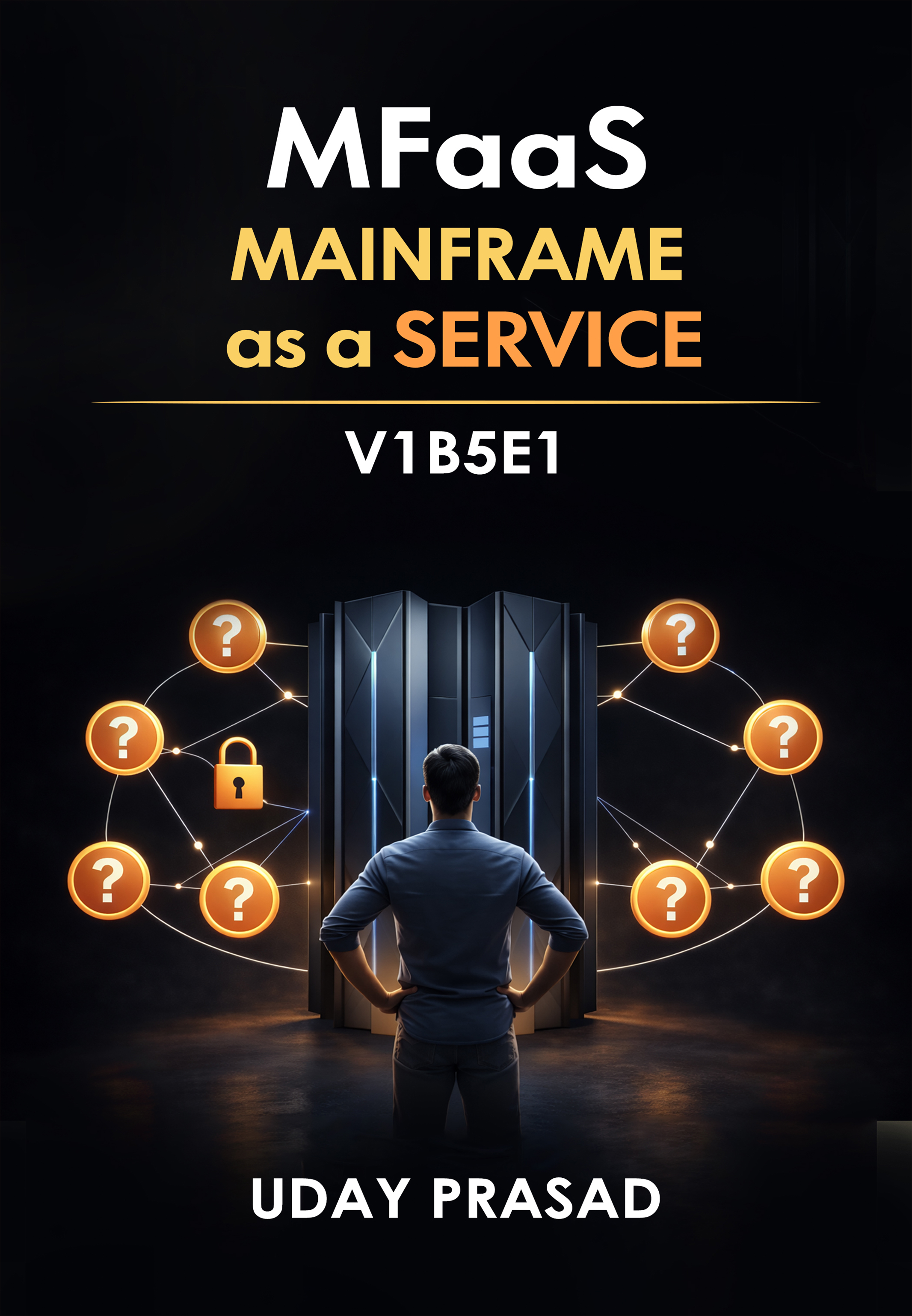
V1B5E1
Author: Uday Prasad
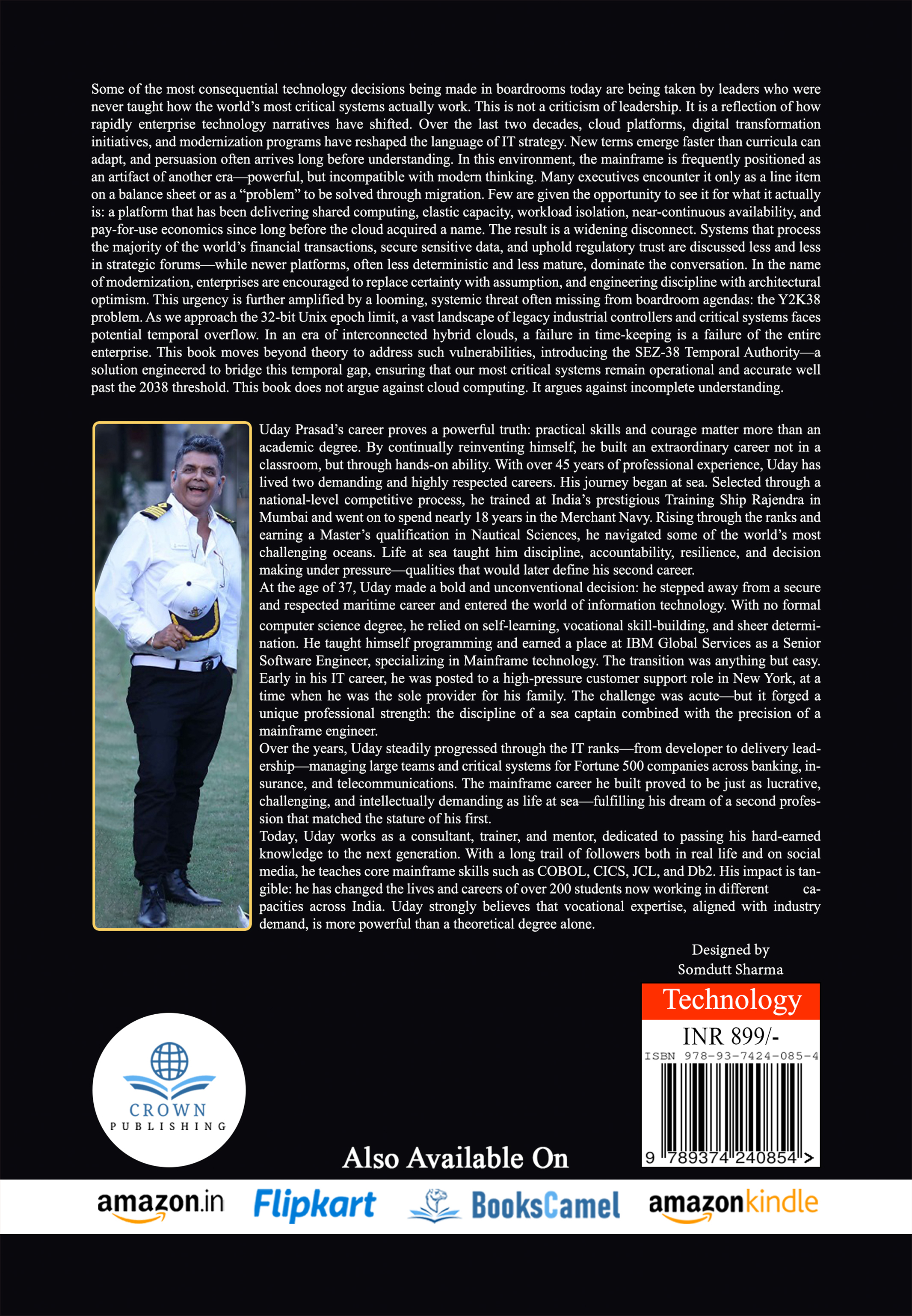
Some of the most consequential technology decisions being made in boardrooms today are being taken by leaders who were never taught how the world’s most critical systems actually work. This is not a criticism of leadership. It is a reflection of how rapidly enterprise technology narratives have shifted. Over the last two decades, cloud platforms, digital transformation initiatives, and modernization programs have reshaped the language of IT strategy. New terms emerge faster than curricula can adapt, and persuasion often arrives long before understanding. In this environment, the mainframe is frequently positioned as an artifact of another era—powerful, but incompatible with modern thinking. Many executives encounter it only as a line item on a balance sheet or as a “problem” to be solved through migration. Few are given the opportunity to see it for what it actually is: a platform that has been delivering shared computing, elastic capacity, workload isolation, near-continuous availability, and pay-for-use economics since long before the cloud acquired a name. The result is a widening disconnect. Systems that process the majority of the world’s financial transactions, secure sensitive data, and uphold regulatory trust are discussed less and less in strategic forums—while newer platforms, often less deterministic and less mature, dominate the conversation. In the name of modernization, enterprises are encouraged to replace certainty with assumption, and engineering discipline with architectural optimism. This urgency is further amplified by a looming, systemic threat often missing from boardroom agendas: the Y2K38 problem. As we approach the 32-bit Unix epoch limit, a vast landscape of legacy industrial controllers and critical systems faces potential temporal overflow. In an era of interconnected hybrid clouds, a failure in time-keeping is a failure of the entire enterprise. This book moves beyond theory to address such vulnerabilities, introducing the SEZ-38 Temporal Authority—a solution engineered to bridge this temporal gap, ensuring that our most critical systems remain operational and accurate well past the 2038 threshold. This book does not argue against cloud computing. It argues against incomplete understanding.
| SKU | Book2301853C |
| ISBN | 9789374240854 |
| Dimensions | 6*9 |
| Total Page | 116 |
| Paper Color | Mixcolor Paper |
| Cover Laminations | Glossy |
| Language | English |
| Publish Date | 01 Apr, 2026 |
No reviews found.
Discover books from our collection.