 Available
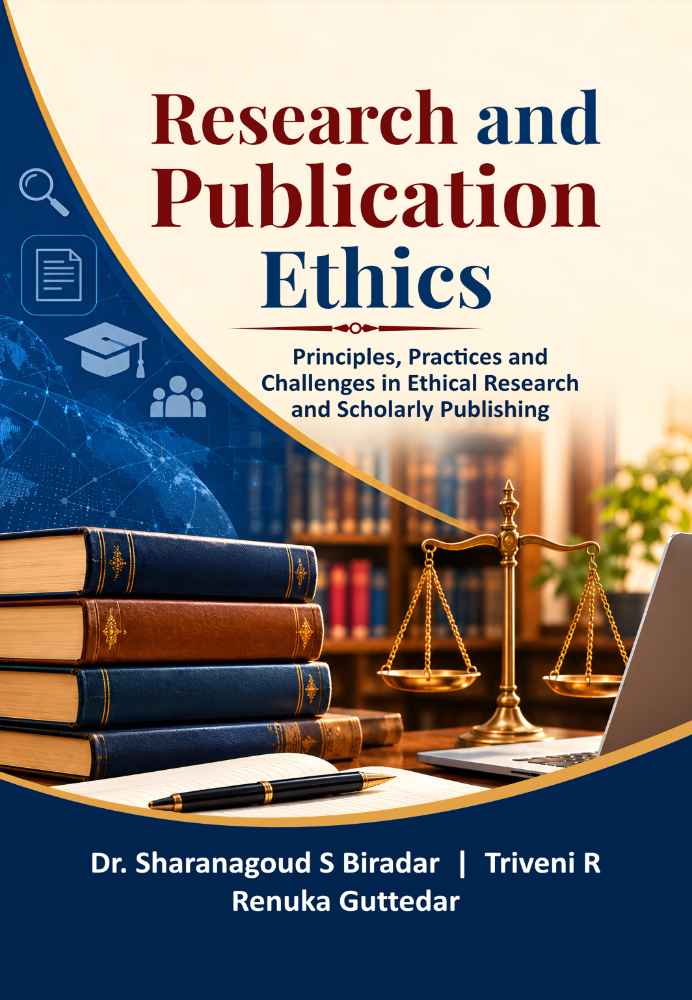
Research and Publication Ethics
By Dr.Sharanagoud S Biradar, Triveni R, Renuka Guttedar
495.00
| SKU Code | Book2302844C |
| ISBN | 9788167454744 |
| Pages | 234 |
| Language | English |
| Genre | Academic |
| Book Type | Paperback |
| Book Size | 6*9 |
| Published Date | 28 November, 2026 |
Synopsis
"The main purpose of Research and Publication Ethics is to develop an understanding of ethical principles that guide responsible research and scholarly communication. It aims to create awareness about scientific conduct, research integrity, and intellectual honesty among scholars. The subject helps learners identify unethical practices such as fabrication, falsification, plagiarism, redundant publication, and predatory publishing. It also trains researchers to follow global ethical guidelines such as COPE and WAME, and to manage conflicts of interest, authorship, and contributorship issues. Additionally, it equips students to use plagiarism detection tools, open-access resources, indexing databases, and research metrics. Overall, Research and Publication Ethics prepares scholars to produce high-quality, credible, and ethically sound research.
A Research and Publication Ethics (RPE) book is needed because it gives researchers a structured way to learn how to do honest, responsible, and socially useful research, and how to publish it without misconduct or plagiarism. It works both as a theory guide and a practical handbook for handling ethical dilemmas, publication pressure, and technical aspects of scholarly writing.
Such a book helps protect integrity and public trust by explaining core values like honesty, objectivity, transparency, and accountability, so researchers can avoid fabrication, falsification, and plagiarism and produce reliable, reproducible work. It also reduces misconduct caused by ignorance by clearly presenting standards, policies, and real world cases, enabling researchers to spot predatory journals, follow authorship rules, and use sources correctly.
Since bodies like UGC have made RPE training compulsory due to rising unethical practices, a good RPE text helps researchers meet regulatory requirements, complete coursework, and maintain a clean publication record that supports their careers. Finally, it equips them to handle complex modern ethical issues (e.g., human/animal studies, AI tools) and to develop strong publishing skills such as journal selection, peer review etiquette, proper referencing, and avoiding predatory outlets, thereby improving the quality, visibility, and impact of their research outputs."
Reader Reviews (0)
No reviews yet. Be the first to write one!
Share Your Thoughts
Your personal identity metrics remain protected inside our system parameters.